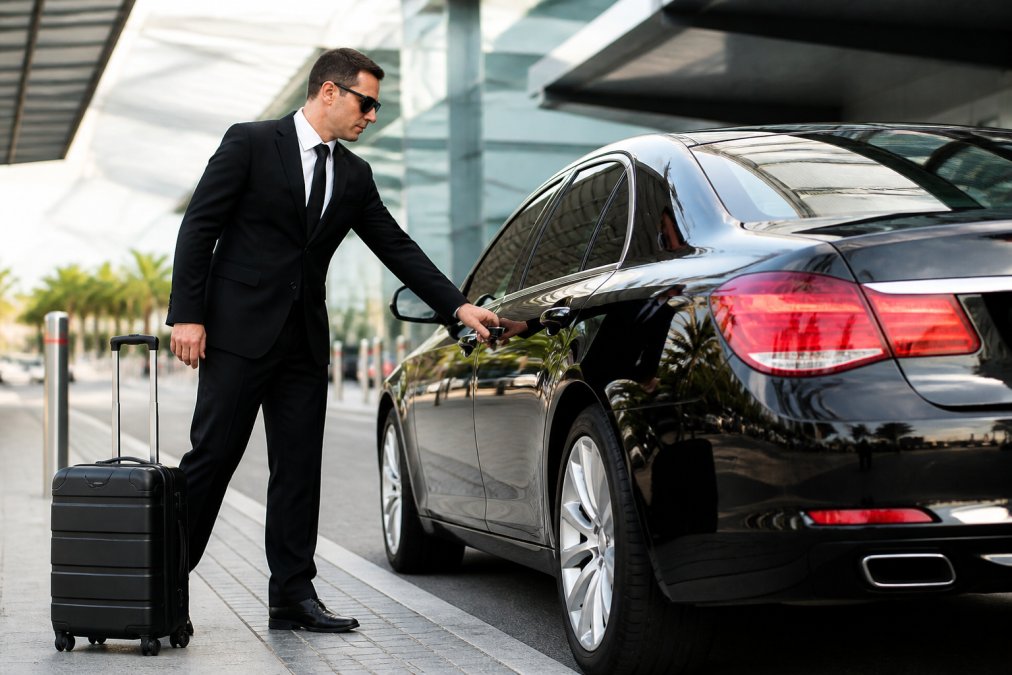
 ultimate-guide
What to Expect From Private Chauffeurs: 2026 Guide
Table of Contents
- What to Expect From Private Chauffeurs: The Full Picture
- Meet and Greet: Door Service, Luggage Assistance, and Flight Tracking
- Chauffeur vs Rideshare Service: What You're Actually Paying For
- Professional Chauffeur Etiquette: Standards Every Rider Should Know
- Safety, Security, and Discretion: What Happens Behind the Wheel
- Private Car Service Cost Factors: What Actually Drives the Price
- Onboarding, Technology, and Recurring Corporate Bookings
- Conclusion: Booking With Confidence
- Frequently Asked Questions
Last Updated: September 18, 2026
What to Expect From Private Chauffeurs: The Full Picture
Private chauffeurs are professional drivers hired to provide pre-arranged, door-to-door transportation in a luxury vehicle, typically including meet-and-greet service, itinerary management, and complete discretion. Unlike a rideshare, the experience is scheduled in advance and built around your timeline, not a driver's availability.
At Regal Limousine, we field the same questions from corporate assistants and frequent travelers: will the driver actually be there, will the car be clean, and can I stop worrying about the logistics? The short answer is yes, when you book with a professional service. Below, we break down exactly what the experience looks like, so there are no surprises.
The single biggest difference between a chauffeur and a rideshare driver is accountability. A chauffeur works for a company with a service agreement, a background check process, and a reputation to protect. That structure is what you're paying for.
Meet and Greet: Door Service, Luggage Assistance, and Flight Tracking
A professional chauffeur meets you at the curb or inside the terminal, handles your luggage, and opens the door for you. Flight tracking means your driver adjusts the pickup time automatically when your plane is early or delayed, so you aren't texting anyone from the tarmac.
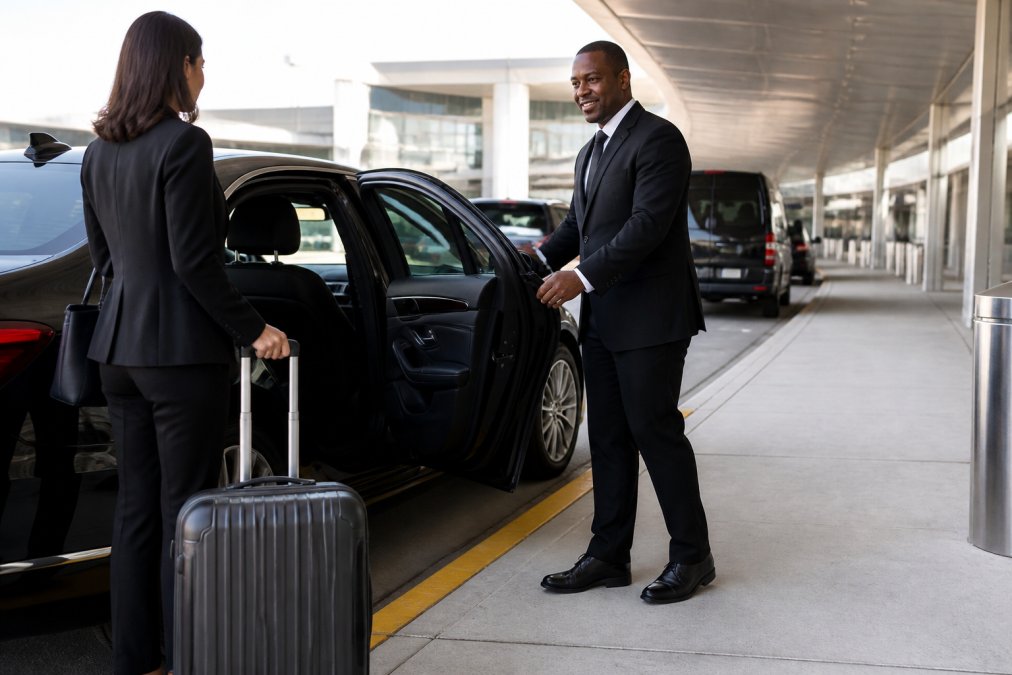
Here's what the arrival sequence usually looks like:
- Your driver monitors your flight number in real time
- You receive a text with the driver's name and vehicle details before landing
- The driver waits at the designated meeting point with a name sign if requested
- Luggage is loaded, the door is opened, and you depart
A common mistake is booking a service that doesn't track flights, then getting charged a wait fee when your flight runs late. Ask about the wait time policy before you book.
Chauffeur vs Rideshare Service: What You're Actually Paying For
The gap between a chauffeur and a rideshare comes down to three things: advance scheduling, vehicle standards, and driver vetting. A rideshare matches you with whoever is nearby. A chauffeur is assigned to you in advance, often the same driver for recurring trips.
| Factor | Private Chauffeur | Rideshare |
|---|---|---|
| Booking | Scheduled in advance | On demand |
| Driver | Vetted, assigned | Random match |
| Vehicle | Luxury, detailed between trips | Owner's personal car |
| Flight tracking | Standard | Not offered |
| Billing | Corporate accounts available | Per-trip card |
| Discretion | Confidentiality expected | Not guaranteed |
| Insurance | Commercial livery coverage | Personal auto policy |
| Licensing | State-issued livery or for-hire permit | Rideshare endorsement |
That table is the summary. The real difference is what sits behind each row, and it's worth walking through because it's what you're actually paying for.
Vetting is a process, not a checkbox. A professional chauffeur service typically runs a multi-step screen: a criminal background check, a motor vehicle record pull, a drug screen, and a review of prior livery or executive-driving experience. Many also require a defensive-driving certification and periodic re-screening. That difference matters most when the passenger is a family member, a client, or someone whose schedule is sensitive.
Insurance is where the two diverge sharply. Rideshare companies provide coverage only during an active trip, and the driver's personal auto policy usually excludes commercial use. A licensed livery operator carries commercial for-hire coverage, which is what protects you if there's an incident. If a provider can't tell you what coverage is in force during your ride, that's a red flag.
Vehicle standards are enforced, not aspirational. Chauffeur fleets are typically on a fixed maintenance schedule and detailed between every trip. For a client meeting or an airport arrival, that difference is visible the moment the door opens.
Scheduling is the quietest advantage. A rideshare is priced and dispatched in real time, which means surge pricing when demand spikes. A chauffeur is reserved at a flat or hourly rate, so a rainstorm or a convention in town doesn't change your price. For recurring executive travel, that predictability is often the entire business case.
For executives moving between meetings or VIP guests arriving on a tight schedule, the predictability is the product. That's the honest case for paying more.
Professional Chauffeur Etiquette: Standards Every Rider Should Know
Professional chauffeur etiquette covers how the driver greets you, addresses you, handles conversation, and protects your privacy. A good chauffeur is courteous, punctual, and largely invisible: present when needed, silent when you're working or on a call.
What most guides miss is that etiquette runs both ways. The best experiences happen when riders share a few details upfront:
- Preferred name and pronunciation
- Whether you want conversation or quiet
- Any stops or route preferences
- Who else will be in the vehicle
Give your driver that context once, and every trip after it runs smoother. This is especially true for corporate accounts where assistants book on behalf of executives who have never met the driver.
Safety, Security, and Discretion: What Happens Behind the Wheel
Safety and discretion are the two non-negotiables of executive transportation. Reputable services run background checks on drivers, maintain their vehicles on a set schedule, and train for defensive driving. Discretion means your destinations, conversations, and passenger identities stay private.
Most guides stop there. The more useful question is what those commitments look like in practice, and where the tiers of service actually differ.
Standard chauffeur vs. security-trained driver. A standard chauffeur is trained in defensive driving, route planning, and customer service. A driver trained in executive protection adds evasive-driving maneuvers, threat recognition, arrival and departure protocols, and often coordination with a client's security team. If your passenger is a public figure, a senior executive, or someone with a known threat profile, ask specifically whether the driver has executive-protection training, the two roles are not interchangeable, and the pricing reflects that.
How discretion is actually enforced. Confidentiality isn't a vibe; it's a set of operating rules. In a well-run service, trip details are visible only to the dispatcher and the assigned driver, and driver NDAs are standard. Ask directly: who sees the trip details, and can the driver discuss the ride with anyone outside dispatch?
Vehicle and route security. Professional fleets maintain service logs, tire and brake inspections, and a documented cleaning protocol between trips. None of this is visible to the passenger, which is the point.
What to verify before your first trip. A short pre-booking checklist covers almost every risk:
- Confirm the driver has passed a criminal background check and a motor vehicle record review
- Ask what commercial insurance is in force during your ride
- Request the vehicle's most recent maintenance date
- Ask whether drivers sign confidentiality agreements
For clients transporting high-net-worth individuals or discussing sensitive business, confidentiality is critical.
Private Car Service Cost Factors: What Actually Drives the Price
Private car service cost factors include trip distance, time of day, vehicle class, wait time, and whether you book on demand or reserve in advance. Hourly rates apply when you need the driver to stay with you across multiple stops; flat rates apply to point-to-point airport transfers.
Pricing varies widely by market and vehicle type, so the only reliable number is the one a provider quotes you directly.
- Is gratuity built into the rate?
- What is the wait time policy for delayed flights?
- Are there surcharges for late-night or holiday trips?
- Is there a minimum hourly commitment?
Onboarding, Technology, and Recurring Corporate Bookings
Onboarding is the step most riders never see, and it's where the best services separate themselves. A corporate account setup typically means adding traveler profiles, storing billing details, and setting booking permissions for assistants. Once that's done, a trip can be booked in seconds rather than over the phone.
Conclusion: Booking With Confidence
The real challenge with private chauffeurs isn't finding one; it's finding one that delivers the same standard every time. Regal Limousine handles luxury airport transfers and corporate travel with a quick booking process, professional chauffeurs, and reliable service across South Florida. Book your ride in seconds and travel with confidence.
Frequently Asked Questions
How does a private chauffeur service differ from a standard rideshare?
A private chauffeur service includes a vetted, professionally trained driver, a luxury vehicle, flight tracking, and a meet-and-greet with luggage assistance. Rideshares dispatch whichever driver is nearby, with no guaranteed vehicle condition or driver background check. With private chauffeurs, you get a confirmed reservation, a set pickup window, and a driver who monitors your flight so delays don't leave you stranded.
What are the professional etiquette standards for a chauffeur?
Professional chauffeur etiquette covers punctuality, a courteous greeting, door service, luggage assistance, and respectful silence unless the passenger starts a conversation. Drivers keep the cabin at the passenger's preferred temperature, avoid phone use, and maintain client privacy by never discussing who they drive or where they go. These standards are what separate executive transportation from a casual ride.
What private car service cost factors should I compare before booking?
Key private car service cost factors include trip distance, time of day, vehicle class, wait time, and whether the booking is hourly or point-to-point. Airport transfers may add meet-and-greet fees, while recurring corporate accounts often qualify for negotiated rates. Pricing depends on your specific itinerary, so request a quote based on your dates and route rather than comparing flat rates.
Do private chauffeurs assist with luggage and door service?
Yes. A professional chauffeur typically greets you at the curb or inside the terminal, takes your bags, loads them into the trunk, and opens your door. On arrival, the driver unloads luggage and confirms the drop-off point. This level of service is standard for airport transfers and executive transportation, and it's one of the clearest differences from rideshare pickups.