 how-to
7 Steps to Handle Difficult VIP Passengers Calmly
Quick Summary
Handling difficult VIP passengers calmly starts with staying composed, listening actively, and acknowledging the concern before responding. Passenger comfort and safety come first, but company rules still apply to everyone, so promising what you cannot deliver makes things worse.
- Pause for two seconds, lower your voice slightly, and keep your posture open before you respond.
- Let the passenger finish speaking, then repeat the concern back in your own words.
- Offer two choices that stay within policy so the passenger keeps a sense of control.
- Stop the ride safely and contact dispatch if a passenger becomes threatening or refuses to stop shouting.
- Keep complaint notes factual and brief, and log them through the company channel rather than personal devices.
Table of Contents
- Why Difficult Situations With VIP Passengers Need a Different Approach
- Step 1: Stay Calm and Professional Before You Respond
- Step 2: Listen Actively and Acknowledge the Concern
- De-escalation Techniques for Chauffeurs in Tense Moments
- Chauffeur Scripts for Difficult Passengers in Common Scenarios
- Handling VIP Passenger Complaints Without Compromising Privacy
- Setting Your Next Steps: Escalation, Follow-Up and Safety Boundaries
- Frequently Asked Questions
Why Difficult Situations With VIP Passengers Need a Different Approach
Difficult VIP passengers are not the same as difficult passengers in general. A VIP expects discretion, speed, and a service that feels personal.
Managing difficult situations with VIP passengers starts with one idea: the passenger's comfort and safety come first, but rules still apply to everyone. For guidance on handling tense passenger situations, see Boca Raton limo service for luxury airport, wedding and corporate travel.
Most tense moments fall into a few groups:
- A delayed flight or a changed pickup time
- A request that breaks company policy, such as an unscheduled stop
- A complaint about the vehicle, the route, or the wait
- Rude or demanding behavior toward staff or other passengers
- A privacy concern from a client who does not want to be seen
Each group calls for a slightly different response. The steps below work for all of them.
Watch out: Promising something you cannot deliver, like a route change the schedule does not allow, is the fastest way to turn a small complaint into a serious one.
Step 1: Stay Calm and Professional Before You Respond
Your tone sets the pace for the whole conversation. Take one breath before you speak.
A calm chauffeur signals that the situation is under control. Passengers often copy the energy they see.
Try this quick reset:
- Pause for two seconds before answering
- Lower your voice slightly
- Keep your posture open and relaxed
- Use the passenger's name or title when you know it
Staying calm does not mean agreeing with everything. It means staying steady while you work out what to do next.
The article suggests a quick reset you can use before responding to a tense passenger.
| Reset action | What it does |
|---|---|
| Pause for two seconds | Gives you time before answering |
| Lower your voice slightly | Keeps the tone steady |
| Keep posture open and relaxed | Signals the situation is under control |
| Use the passenger's name or title | Builds rapport when you know it |
Step 2: Listen Actively and Acknowledge the Concern
Let the passenger finish speaking before you respond. Interrupting makes most complaints louder.
Then repeat the concern back in your own words. This shows you heard it and gives the passenger a chance to correct you.
For example: "You're saying the car was delayed at the terminal and you missed your first meeting. Is that right?"
Acknowledging the concern does not mean accepting blame. It shows the passenger that their experience matters.
De-escalation Techniques for Chauffeurs in Tense Moments
De-escalation works best before a situation becomes a confrontation. The techniques below are ordered by intensity, starting with the gentlest. For VIP passengers, the goal is not just to calm the moment but to do it without an audience, without a scene, and without signaling that the passenger has lost control of the interaction.
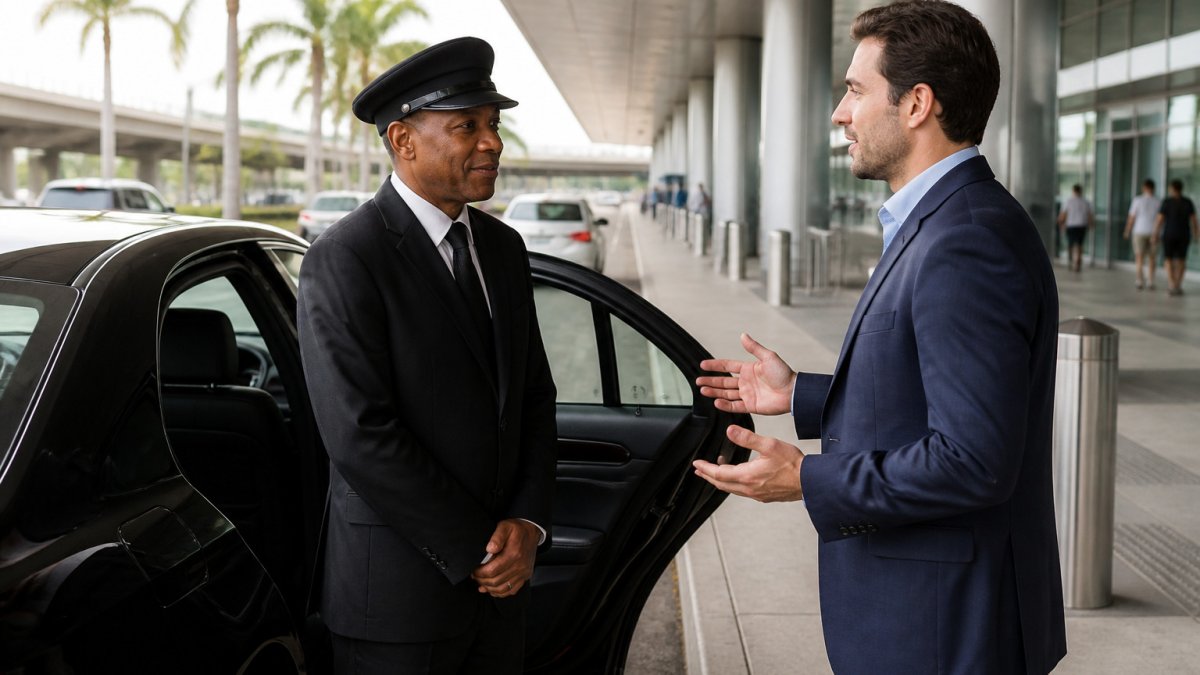
- Lower the volume and slow the pace. Speak quietly and evenly. People tend to match your pitch and tempo. A VIP who is used to being heard may escalate simply because they feel ignored, so give them the floor first.
- Give a short, clear reason. Explain what you can do, not just what you cannot. "I can't make that stop on this route, but I can drop you at the entrance on the next block and wait" is more useful than "That's not allowed."
- Offer two choices within policy. Options restore a sense of control without breaking rules: "We can take the highway and arrive early, or the scenic route and arrive on time. Which do you prefer?"
- Name the feeling without naming blame. "That sounds frustrating" or "I'd be annoyed too" cools a heated moment faster than a fact. Avoid "You're overreacting" or "Calm down," which usually does the opposite.
- Create physical space and privacy. Step to the side of the vehicle rather than standing face-to-face. If other passengers or bystanders are present, move the conversation to a quieter spot. VIP clients often care as much about who saw the exchange as about the exchange itself.
When de-escalation is not working
De-escalation has a ceiling. If a passenger becomes threatening, uses slurs, tries to grab the wheel or door, or refuses to stop shouting after two calm attempts, stop the ride safely when you can.
For VIP accounts, the calculation is slightly different. A VIP who is merely rude is a service problem. A VIP who is unsafe is a safety problem, and safety outranks the account relationship every time.
A note on audience and discretion
Many tense moments with VIP passengers happen in front of someone the passenger wants to impress: a colleague, a family member, a client of their own. De-escalating in public is harder because the passenger has more to lose. When it is safe to do so, lower your voice, angle your body away from the audience, and move the conversation to the side of the car or inside the vehicle with the door closed.
Chauffeur Scripts for Difficult Passengers in Common Scenarios
Having a few ready-made lines helps you stay steady when stress spikes.
Flight delay or early arrival: "I can see your flight has moved.
Request outside policy: "I understand why that would help.
Complaint about the vehicle: "Thank you for telling me. I'll address that right away.
Passenger raising their voice: "I want to help you get where you need to go.
These scripts keep the focus on solutions.
Handling VIP Passenger Complaints Without Compromising Privacy
VIP clients often expect discretion. Privacy and courtesy should never be traded away to resolve a complaint.
Keep these habits in mind:
- Do not mention a passenger's name or identity in front of other passengers or staff
- Log complaints through the company channel, not on personal phones or social media
- Share only what the dispatcher needs to fix the problem
- Keep notes factual and brief
VIP service differs from preferential rule enforcement. A VIP can expect a faster response, a cleaner vehicle, and a warm greeting.
A common mistake is agreeing to an exception to avoid a scene. In practice, that exception often creates a bigger issue later, for the chauffeur and for the company.
Setting Your Next Steps: Escalation, Follow-Up and Safety Boundaries
Knowing when to escalate protects both you and the passenger. Most chauffeurs escalate too late, usually because they are trying to protect the account or avoid looking like they cannot handle a VIP. A clearer threshold removes that guesswork.
Escalation thresholds
Escalate to dispatch or a supervisor when any of the following is true:
- Safety trigger. The passenger makes threats, uses abusive language, attempts to interfere with the vehicle, or refuses to stop shouting after two calm attempts. Stop the ride safely and contact dispatch. If there is an immediate threat, call 911 first.
- Policy trigger. The request involves a route change, stop, or accommodation you cannot approve, or the passenger asks you to break a safety or legal rule. Do not negotiate the rule yourself; hand it to dispatch.
- Resolution trigger. The passenger refuses a reasonable resolution after two attempts. A third attempt rarely helps and often escalates.
- Account trigger. The passenger is a VIP account holder and the issue involves billing, privacy, or a complaint about the vehicle or driver. Loop in the account manager early rather than letting it sit. To plan follow-up with clients, you can learn how chauffeur service gratuity and fees are calculated.
A simple way to remember the order: safety first, then policy, then resolution, then account. If two triggers apply at once, the higher one wins.
How to escalate without making it worse
Escalation is a handoff, not a surrender. Keep the passenger informed: "I want to get this right for you, so I'm going to bring in my dispatcher who can approve that." That framing positions the escalation as service, not as punishment.
When you contact dispatch, give a short, factual summary: who is in the vehicle, what was requested, what you offered, and what the passenger said. Do not editorialize about the passenger's personality. Dispatchers act on facts.
Documentation that protects everyone
After the ride, write it down while it is fresh. A useful incident note includes:
- Date, time, and location of the pickup and the incident
- The passenger's name and account, if known
- What was requested and what you offered
- The exact words used, if you can recall them, in quotes
- Who you contacted and when
- How the ride ended
Keep notes factual and brief, and log them through the company channel, not on personal phones or social media. Do not include details about the passenger's schedule, companions, or destination beyond what dispatch needs. For VIP accounts, assume the note may be read by the account manager and, in a dispute, by the client. Write it as if it will be.
Passenger follow-up
A short follow-up from dispatch or the account manager can turn a bad ride into a retained client. The follow-up should acknowledge the experience, state what the company will do differently, and avoid admitting fault the company has not confirmed. "We're sorry the pickup did not go as planned. Here's what we're changing for your next booking" is usually enough.
Crew wellbeing and debriefing
A tense ride can leave you drained, and a pattern of tense VIP rides is a warning sign, not a personal failing. Take a short break when you can, and talk with a supervisor about any incident that stayed with you. A brief debrief, what happened, what worked, what you would do differently, is more useful than replaying the ride in your head.
Escalation is not a failure of service. It is the mechanism that lets you stay calm, stay polite, and stay safe at the same time. The chauffeur who escalates early is usually the one who keeps the account.
Frequently Asked Questions
How should a chauffeur respond to an upset VIP passenger?
Stay composed, lower your voice, and let the passenger finish speaking before you reply. Acknowledge the specific concern in one clear sentence, such as noting that the flight was delayed, and then state what you can do right now. Avoid defensive language or excuses. Once the passenger feels heard, offer a concrete option like a new route, an updated pickup time, or a call to the dispatcher. Confirm the agreed step so the passenger knows what happens next.
What should a chauffeur do if a VIP passenger becomes verbally abusive?
Keep your tone even and do not match the passenger's volume or language. Make one calm statement that you want to help and that you need the conversation to remain respectful. If the behavior continues or threatens safety, stop the vehicle at a safe location when it is possible to do so and contact your dispatcher or supervisor. Document the time, location, and what was said. Your safety and the safety of others in the vehicle take priority over any single booking.
How can chauffeurs handle complaints while protecting passenger privacy?
Keep complaint details between yourself, your dispatcher, and the account manager. Do not discuss the passenger's identity, itinerary, or companions with anyone outside the company, and do not repeat the complaint in front of other passengers or staff. When escalating, share only the facts needed to resolve the issue. Following a clear confidentiality practice builds trust with VIP clients and reduces the risk of a service recovery turning into a larger problem.
When should a chauffeur contact a dispatcher or supervisor about a difficult passenger?
Contact dispatch as soon as a passenger's behavior threatens safety, when a request conflicts with company policy or legal requirements, or when you cannot resolve a complaint within the ride. Do not wait until the end of the trip. Early contact gives dispatch time to adjust the itinerary, send support, or document the incident. Use a short, factual update so dispatch can act quickly.